

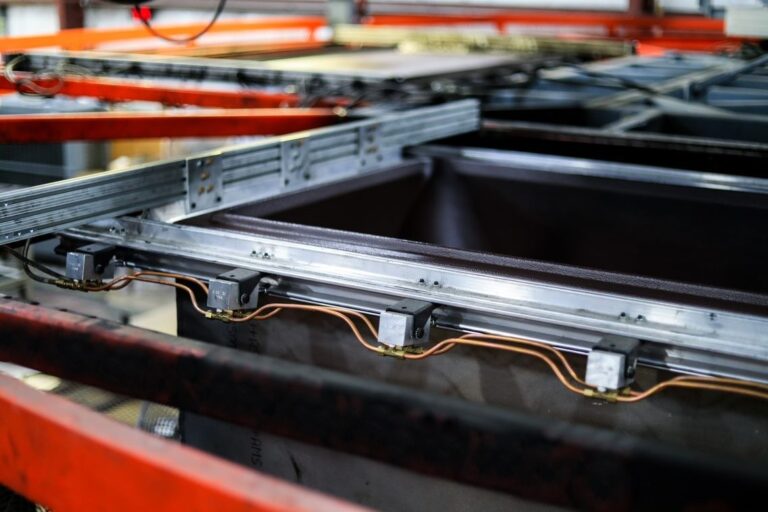
Thin-gauge thermoforming vs thick-gauge thermoforming – what differentiates one from the other? Are the manufacturing processes similar? Which is the preferred method?
If you have been asking yourself these questions, you have come to the right place. This blog will answer these questions and more.
Thermoforming Gauges 101

As a quick refresher, thermoforming is an industrial manufacturing method where a plastic sheet is heated to a pliable temperature, formed to a specific shape in a mold, and trimmed to create a usable part or product.
Thin-gauge forming and thick-gauge forming are the two predominant applications, with the primary distinction being the dimensional variance between the thermoplastic material.
Thin, or light-gauge forming converts plastic ranging in thickness from .2540 mm (.010 inches) thick to 1.524 mm (.060 inches thick).
While thick, or heavy-gauge forming converts plastic that is more than 1.524 mm thick.
Plastic sheeting can also be measured in mils. A mil is equal to one-thousandth of an inch, or 0.001 inch (0.0254 mm). To give you some perspective, a sheet of standard copy paper is 10 mils.
A dimensional difference of 10 mils will have a significant impact on the strength, durability, and flexibility of a finished part.
Key Differences
Thickness variation is not the only distinguishing factor between light-gauge and heavy-gauge forming.
Although the processes are similar, they have distinctive properties that must fit a project’s design specifications.
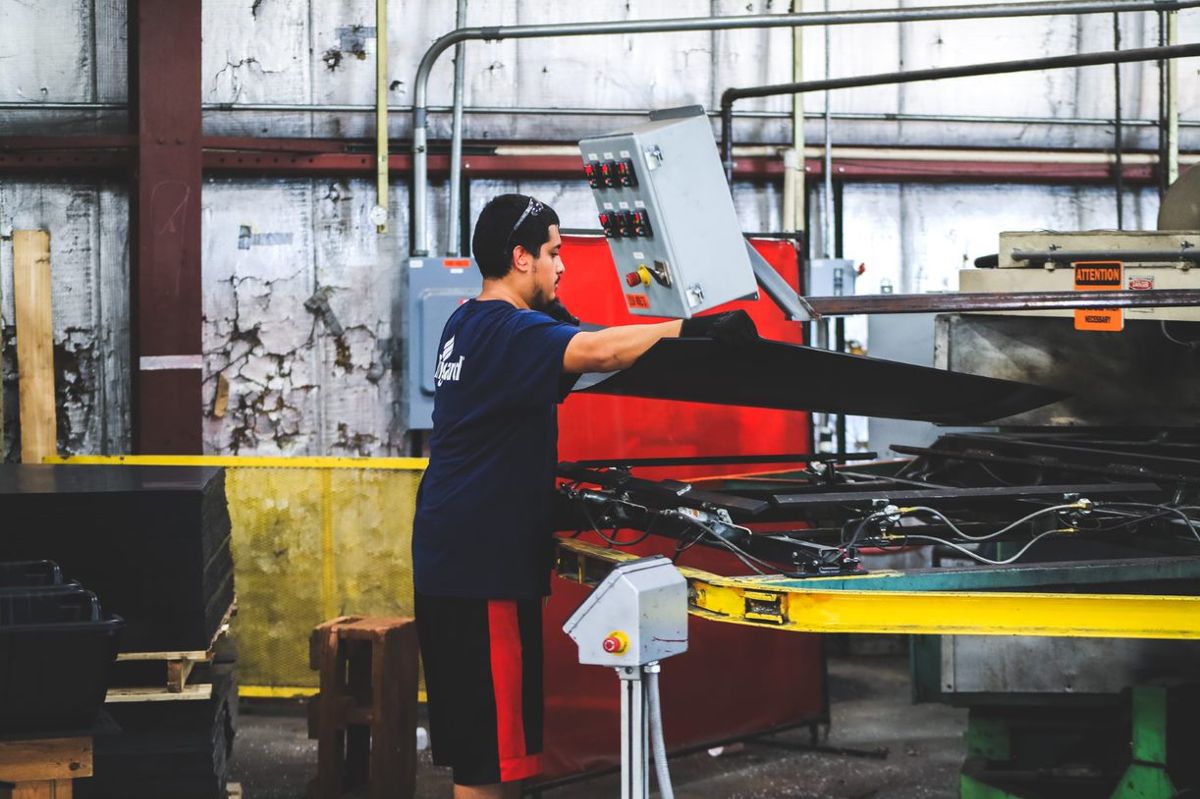
Machinery, therefore, needs to be selected in accordance with a job’s requirements. Since the equipment required is unique for each part category, most manufacturers specialize in only technique.
Another difference is how the material is loaded into the thermoforming machine.
In light-gauge forming, the sheeting is either roll-fed or comes from an upstream extrusion process. In heavy-gauge forming, the sheeting is either manually or robotically fed into the equipment.
As for material type, there is some crossover. However, other synthetics may be added based on the desired result.
Thin-Gauge Applications

Light-gauge thermoforming focuses on creating very thin three-dimensional objects and is most often used to mass produce semi-rigid containers, packaging materials, and displays.
Many components are designed to be recyclable or disposable. Various sized clamshells and blister packs are regularly used for hygiene products and food packaging.
Other examples of light-gauge commodity items you come in contact with on a regular basis include plastic cups, dunnage trays, packaging inserts, and point of purchase displays, to name a few.
Thick-Gauge Applications
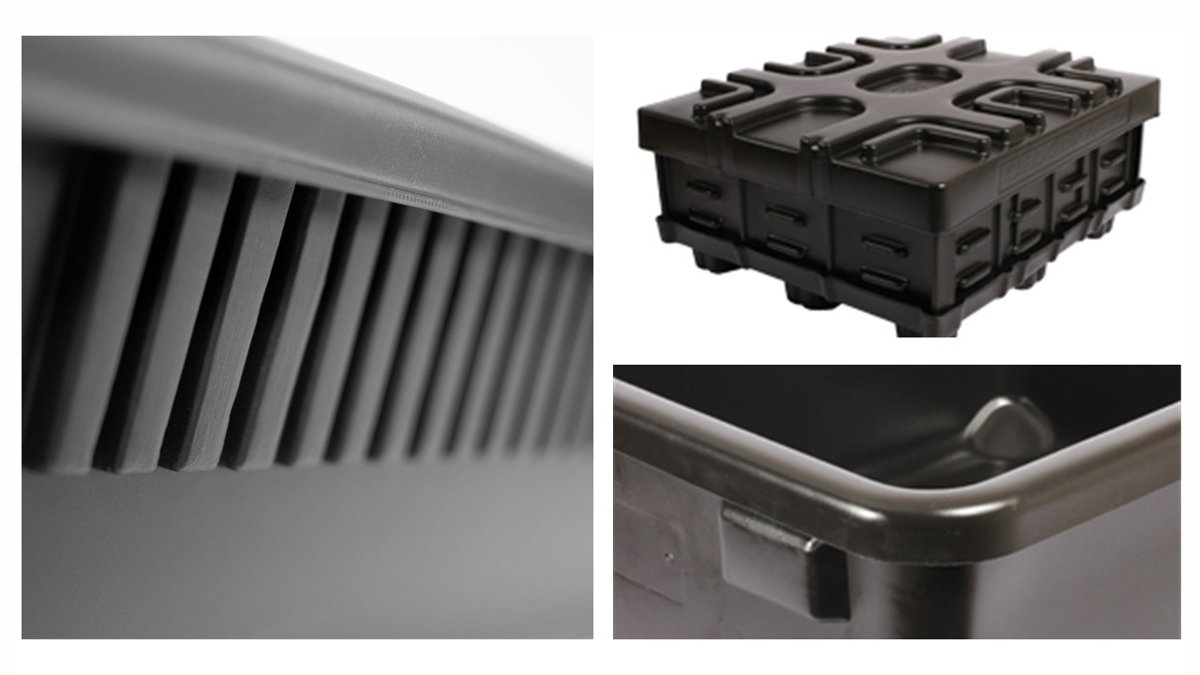
Thick-gauge forming produces large components that are stronger and more structurally sound than lighter gauge parts.
The higher gauge of thick thermoplastics also makes it possible to create complex parts with smooth finishes.
Thick-gauge vacuum forming is widely used in the transportation, healthcare, retail, and funeral industries to name a few.
Examples of parts produced at heavier gauges include airline tubs, industrial equipment parts and covers, railroad containers, electronic enclosures, and external components for major appliances.
Comparing Thin- vs Thick-Gauge Thermoforming

Let’s take a look at and compare some of the main differences of thin-gauge thermoforming vs thick-gauge thermoforming.
| Thin-Gauge | Thick-Gauge |
|---|---|
| Less than 1.5mm | Greater than 1.5mm |
| Roll fed | Sheet fed |
| Higher production quantities | Lower production quantities |
| Faster production times | Slower production times |
| Shorter lead times | Longer lead times |
| Less expensive tooling | More expensive tooling |
How does GPI fit in?
GPI specializes in custom thick-gauge thermoforming.
Our state-of-the-art equipment will accommodate thicknesses ranging from .065 inches to .5 inches.
We have the expertise to produce high-quality, cost-effective plastic parts manufactured to our customers’ needs and specifications.
Contact us with any questions you might have and find out how we can help with your next project.