

At GPI, we strive to educate our current and prospective customers on the ins and outs of all things pertaining to thermoforming.
This month, you will get an inside look at the engineering phase of our process. Brock Strader, Project Manager, will walk you through each step from start to finish.
He will make creating a design from a customer’s drawing seem simple and easy. But don’t let that fool you, Brock is talented and there are many vacuum forming design guidelines he must follow to ensure a quality part can be thermoformed.
Let’s see what he has to show us.
Interested in Learning More?
This video covered a lot of information in just a few short minutes.
To help you fully grasp how prototypes and parts are created, below is an overview of the technical factors that impact the development phase.
You will recognize some of the terminologies from the video.
Dimensioning
Manufacturers commonly use CAD software to draw 2D or 3D designs. These drawings detail every aspect of the part, forming the foundation of the production process.
Central to each design are its dimensions, which should be generated on the mold side of the object. For the end product to meet the required specifications, measurements must be precise, consistent, and regulated.
Conversely, the non-mold side might exhibit some variations in dimensions. Such variations can stem from inconsistent material thickness distribution and overstretching.
By clearly distinguishing between the two sides in their designs, engineers can keep the mold-side as a stable reference. This approach allows managed variability on the opposing side, guaranteeing alignment with the design intent and quality standards.
Setting the Right Draw Ratio
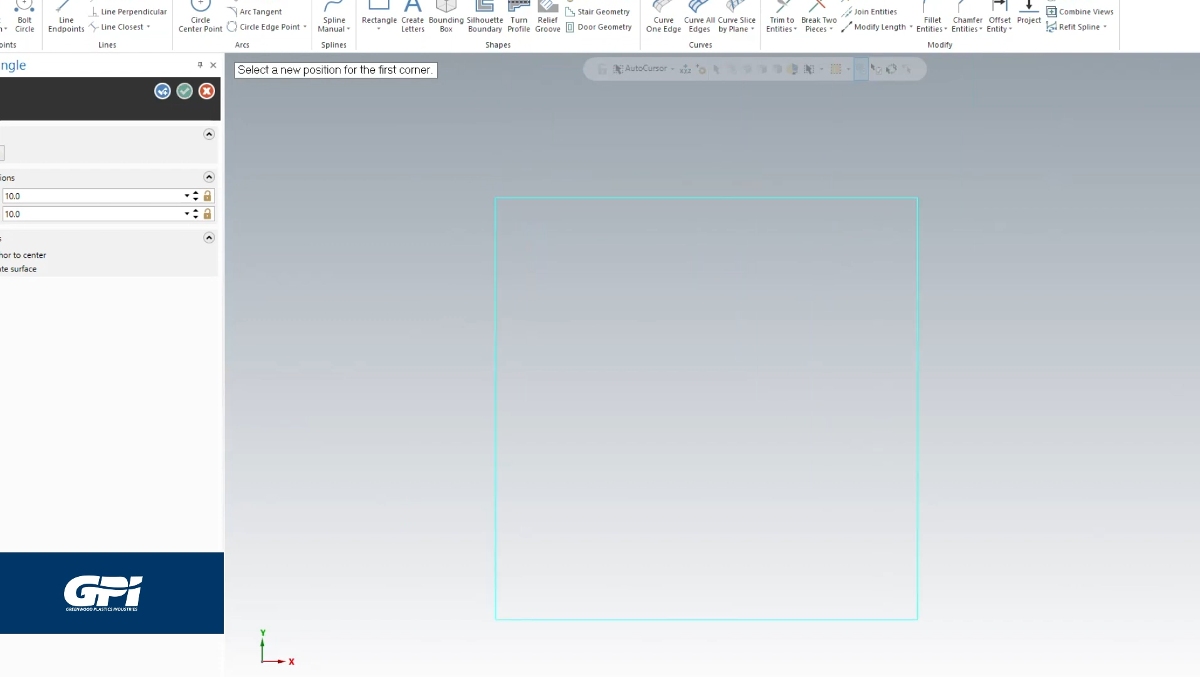
The draw ratio refers to the relationship between the initial size of a sheet and the dimensions of the finished part. Basically, it measures the extent to which the thermoplastic material will need to stretch to achieve its intended shape.
A correct draw ratio ensures that the plastic material stretches just enough to produce a high-quality part without overextending and causing excessive material thinning. It also minimizes material wastage and reduces production costs.
The draw ratio is represented as a comparison of the dimensions before vacuum forming to the final dimensions after thermoforming. For example, if a plastic sheet expands from an initial width of 10 inches to a final width of 20 inches, the draw ratio would be 2:1.
For taller or deeper objects, a thicker material is needed. Ideally, the draw ratio should be kept within a 1:1 range, and the part should not be deeper than its width.
Choosing the Correct Draft Angle
Draft refers to the slight incline or taper given to the sidewalls of a proposed part. This taper serves multiple purposes, with the primary one being to facilitate the smooth removal of the molded object from its forming tool.
For easy demolding without causing damage or deformation to the part, it’s essential to employ an adequately large draft angle.
A more pronounced angle not only maintains a consistent wall thickness throughout the object but also elevates its structural integrity and longevity.
Staying Within Tolerances
Measurement tolerances directly affect a part’s functionality, performance, and its suitability for its intended application. They are influenced by both the object’s geometry and the type of plastic selected for production.
When conceptualizing and designing a part, engineers aim to meet the tolerances specified by the customer. However, there are instances when experienced manufacturers, familiar with the material’s behavior, might recommend modifications and adjustments to strike a balance between accuracy and durability.
Utilizing Radii and Chamfers
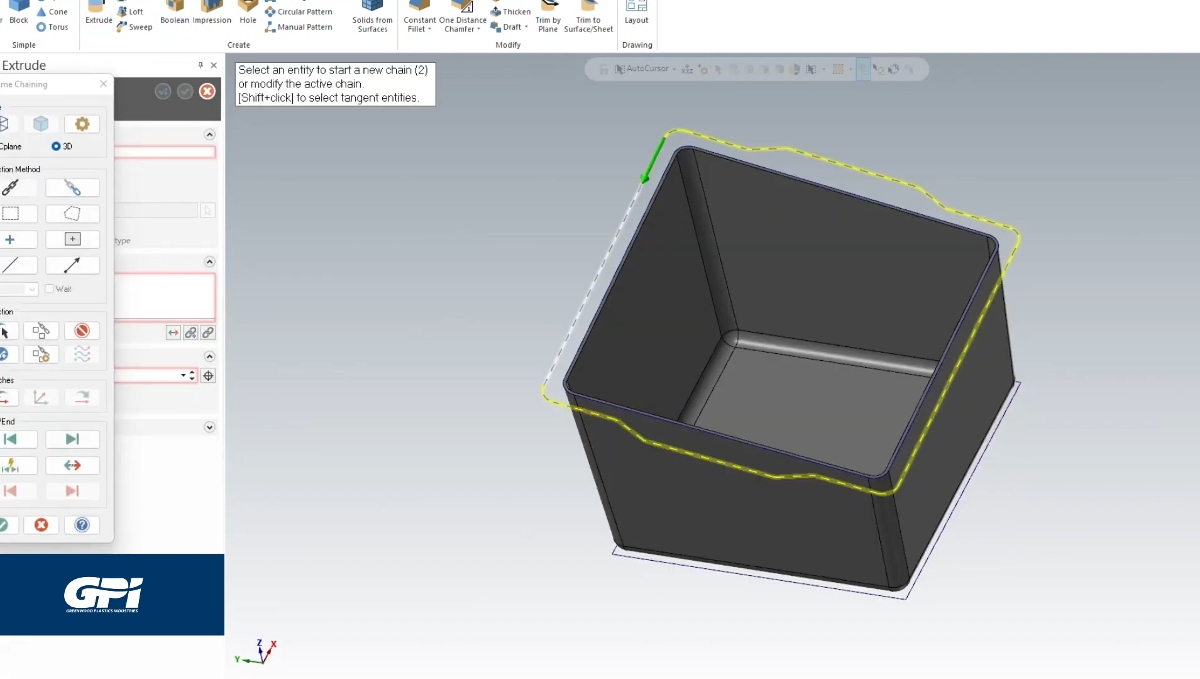
While vacuum forming is a highly adaptable process, it requires certain design considerations to achieve optimal results.
One of the most critical aspects is to avoid manufacturing parts with sharp corners. These angles can lead to uneven material distribution, increasing a part’s vulnerability and reducing its overall strength.
Sharp corners can also cause the material to become trapped, resulting in undesirable thin spots or folds known as webbing.
To counteract these types of issues, engineers can incorporate radii and chamfers into a design. These features distribute stress more uniformly over a larger area compared to sharp 90-degree corners and enhance the overall aesthetic appeal of the part.
Designing for Undercuts
Undercuts are design features in which a portion of the mold protrudes into the plastic, preventing its direct removal from the mold.
When the plastic cools and solidifies around these protrusions, it effectively “locks” onto the mold, making demolding challenging or even impossible without damaging the part.
Manufacturers producing parts with undercuts implement various strategies to aid in successful mold release.
Some use multi-piece molds (split molds) that can be disassembled. Others prefer post-processing, where parts are designed with extra material that is later trimmed or machined away after forming.
Do You Have Additional Questions? GPI Has Answers
Hopefully this post has given you a little more insight into the vacuum forming design guidelines we follow when producing our high-quality products.
With more than 30 years in the industry, GPI has the experience and expertise to design, engineer, and manufacture quality custom thermoformed parts.
If you need advice or have any questions about thermoforming, feel free to share your comments below. You can also call us at (217) 388 – 1276 or email us directly.