
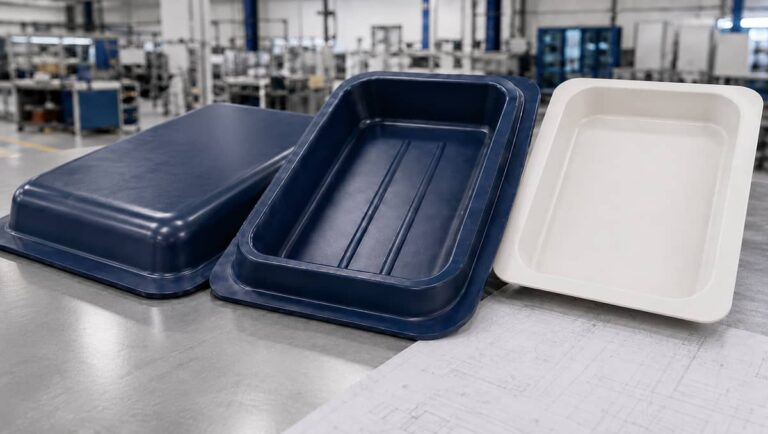
Your early-stage concept for a new plastic component is evolving. The core design is coming together, and now you’re responsible for choosing a manufacturing method that can produce it effectively and economically.
Thermoforming is one option on the table. While the part may appear straightforward, you know many factors can influence a component’s performance, manufacturability, and long-term reliability.
That means you need to take a closer look at how well thermoforming can support the part’s intended use and production goals. To help guide your decision, this blog addresses the question: Is thermoforming right for your custom plastic project?
What Must the Finished Part Actually Do?
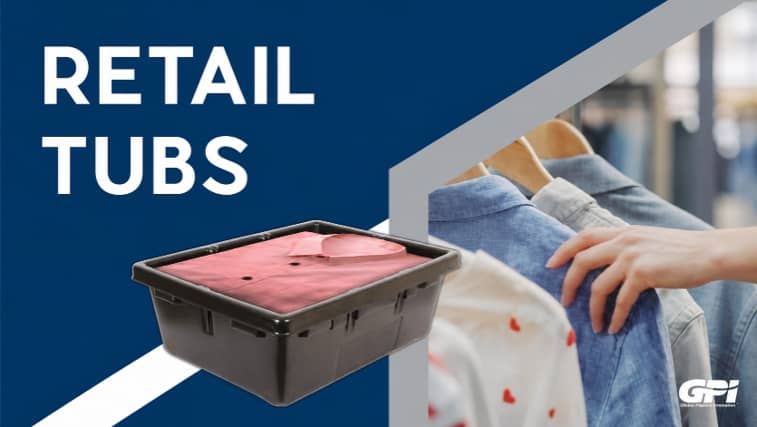
A good starting point is to define exactly what the finished part must accomplish and how it will perform in real-world use.
Will it be used for protection, storage, containment, organization, or display? Does it need to withstand repeated impact, support weight, or allow for nesting and stacking? These performance demands help you determine whether the part aligns with thermoforming’s advantages.
Thermoforming is well suited for lightweight, rigid, three-dimensional parts that need a high strength-to-weight ratio. Because the process forms thermoplastic sheets into functional geometries, it is a strong option for components that will be handled frequently, cleaned regularly, or used in demanding environments.
Is the Part’s Shape Right for the Process?
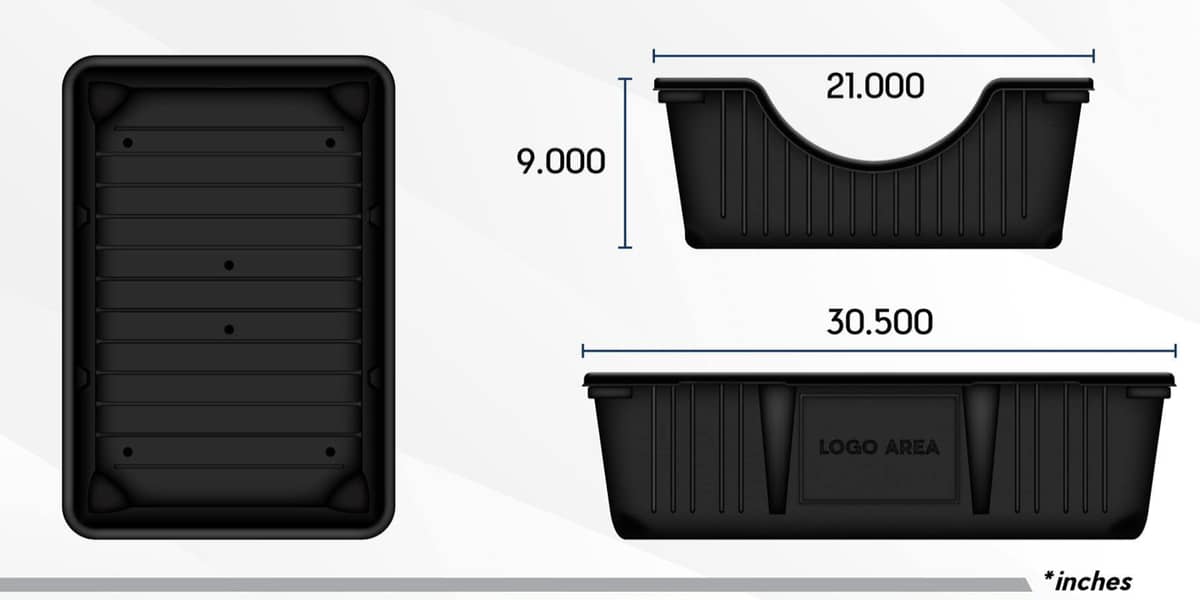
The part’s formed configuration can directly affect how reliably it can be produced through thermoforming. The process is particularly effective for components with broad surfaces, open shapes, smooth contours, and moderate draw depths.
Typical applications include:
- Shallow-to moderate-depth trays, tubs, and bins
- Blisters and clamshell packaging
- Protective housings, covers, and guards
- Packaging inserts and retail packaging
- Plastic liners, paneling, and enclosures
- Point-of-purchase displays
- Interior automotive components
As you assess your design, the main technical question is whether the shape can be formed cleanly while meeting dimensional and rigidity targets. That includes looking at how well the material can be drawn to the desired depth without excessive thinning or unwanted variation. While deep-draw forming is possible, it requires careful engineering planning to prevent weak spots and maintain quality.
Do the Material Requirements Align with Thermoforming?
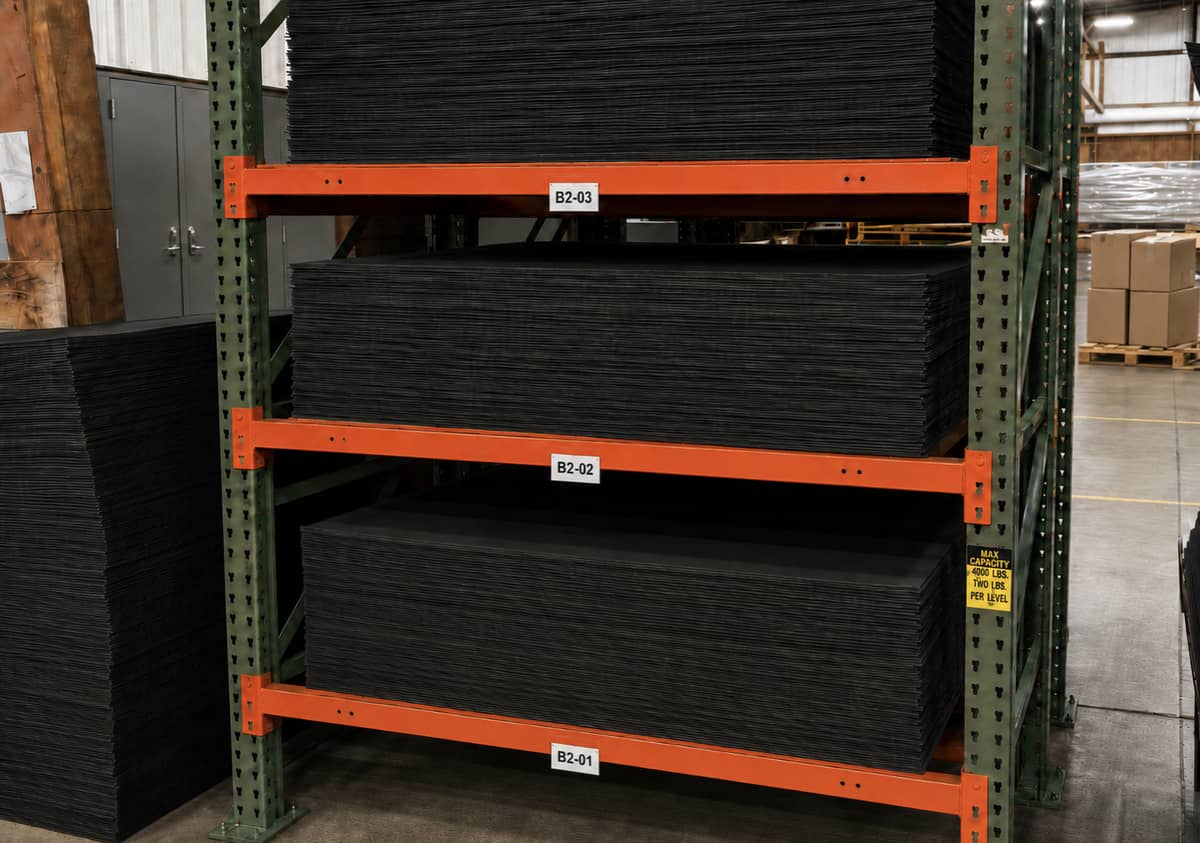
Thermoforming works with a wide variety of thermoplastic materials, such as ABS, HIPS, PET, polycarbonate, and polyethylene. Each material offers different properties, so the objective is to match the material to your part’s end-use environment.
Will the component face daily handling, moisture, abrasion, cleaning chemicals, temperature changes, or outdoor exposure? If an extruded thermoplastic sheet can handle those conditions, thermoforming is often a strong option.
However, if your design requires thick, solid sections or highly concentrated structural strength in small areas, another production method may be more suitable.
Can the Part Be Formed and Released Cleanly?
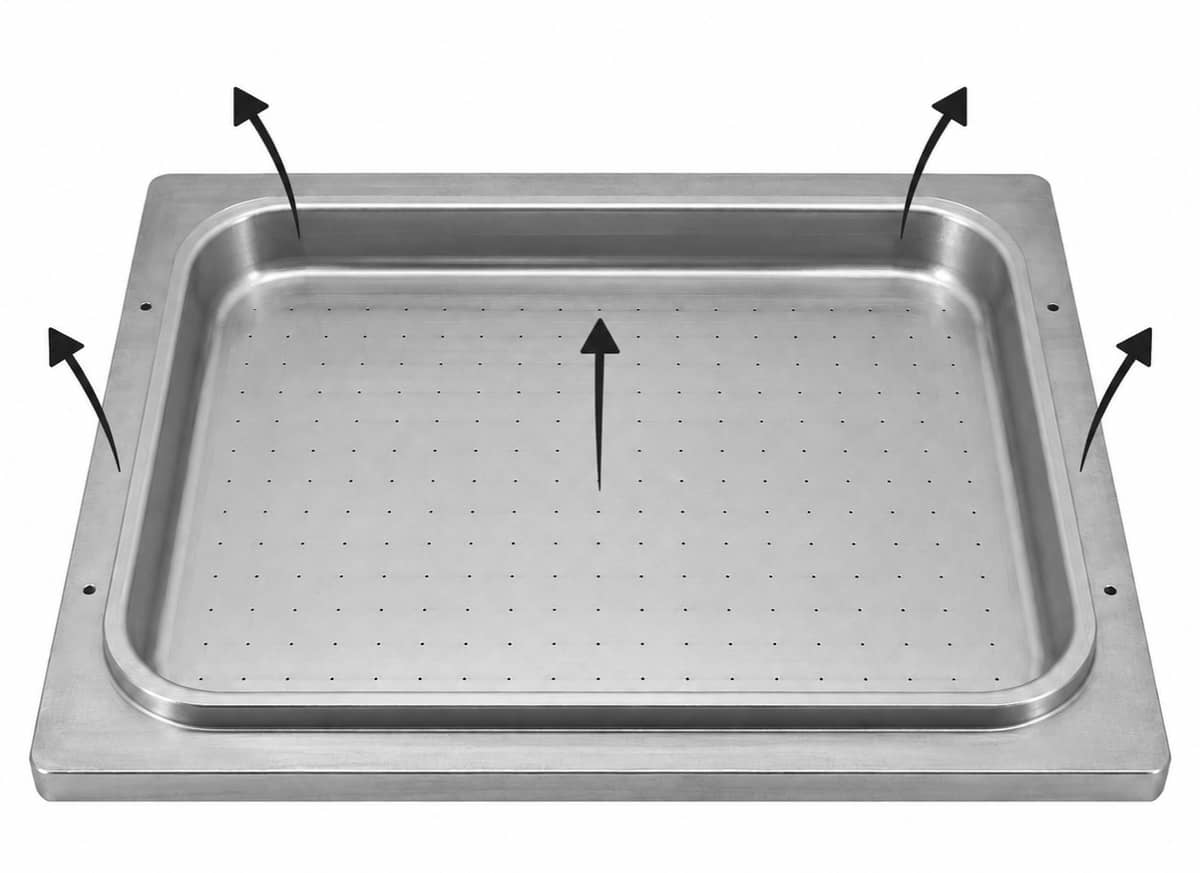
Successful thermoforming depends on clean mold release and trimming.
Parts typically benefit from draft, which is a slight taper applied to the sidewalls. If your part has straight vertical walls, deep pockets, reverse angles, or locking features, mold release may become more difficult, which can increase scrap or cycle times.
The good news? Small design adjustments—like tweaking wall angles, adding corner radii, or repositioning features—can often solve these issues while preserving functionality.
Can Structural Support Be Built Into the Formed Shape?
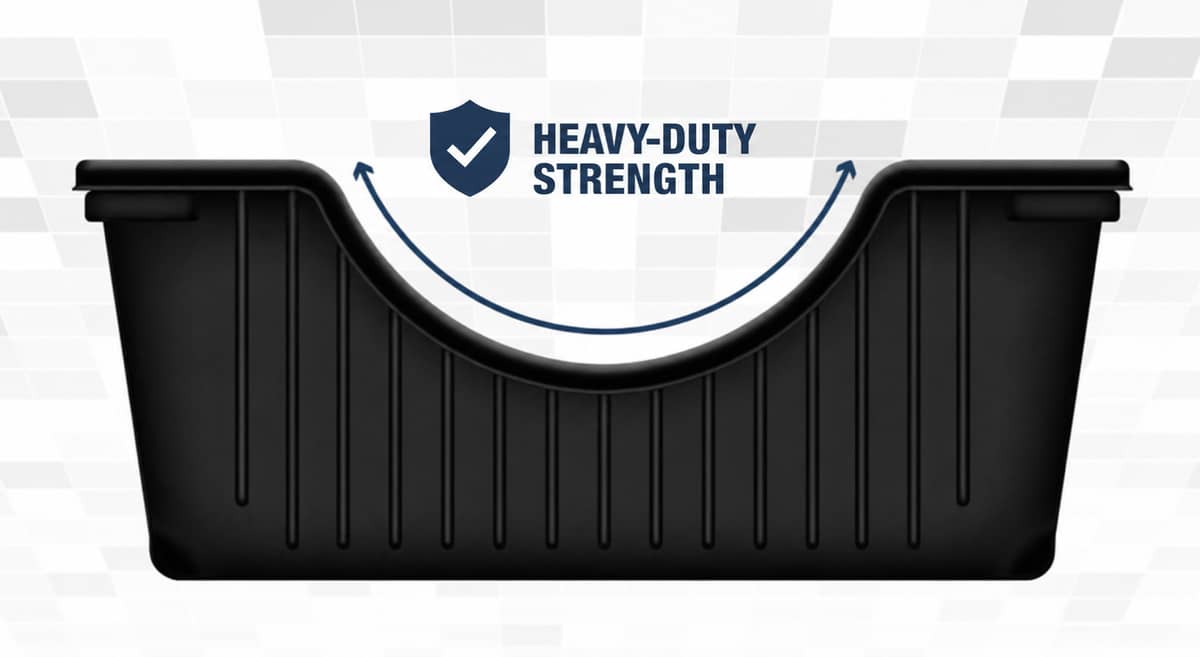
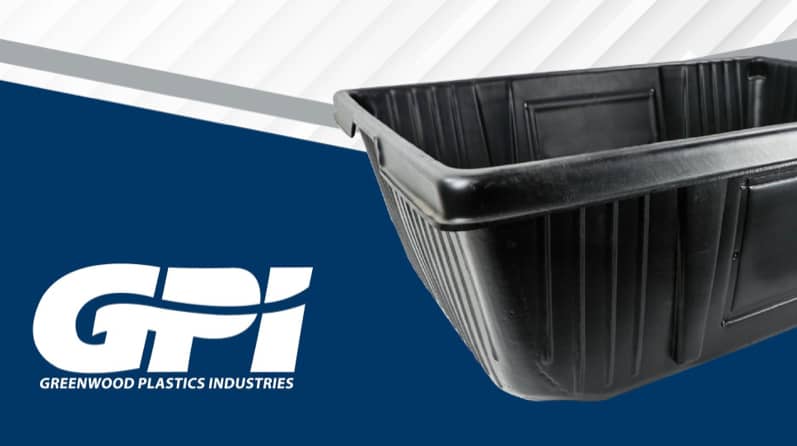
Thermoforming is particularly effective when the part’s strength comes from both material selection and formed design features. Instead of relying on material gauge alone, thermoformed parts can gain rigidity through features such as ribs, grooves, flanges, lips, formed edges, and rounded corners. Examples include:
- A tray with a perimeter lip for containment and stiffness
- A tub with ribs or corrugations for better stacking
- A housing with formed flanges for mounting or reinforcement
When these structural details can be built into the design, thermoforming can deliver the required strength and function while keeping the finished part lightweight and efficient to produce.
Can Production Volume Be Supported?
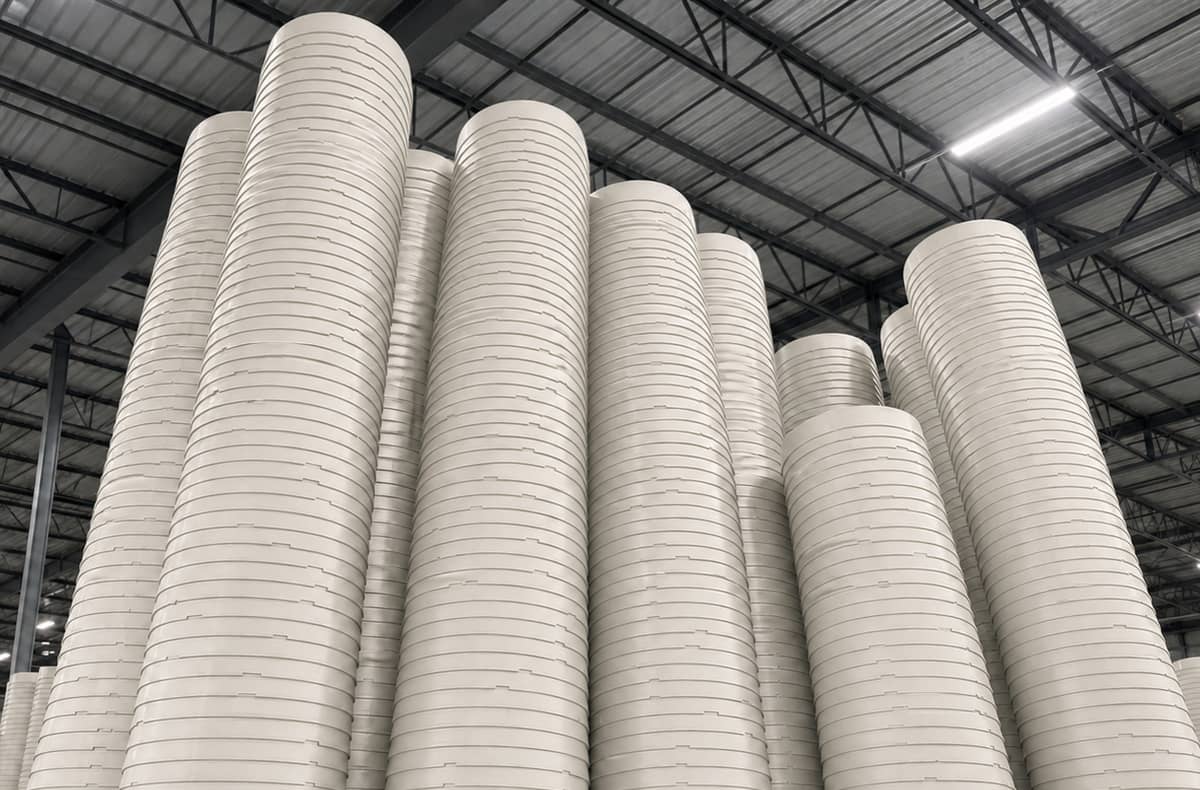
Budget and production volume also play important roles in selecting the right manufacturing method.
Thermoforming can provide a cost-effective alternative to processes that require more expensive tooling. Tooling costs should still be reviewed upfront, as they will vary depending on the part’s size, complexity, material, and performance demands.
Thermoforming can be an attractive option for medium-to large-volume jobs, recurring orders, or projects that require repeatable production without the higher tooling investment associated with other methods.
You’ll also want to take long-term plans into account. If the component will be reordered, used across multiple locations, or produced in recurring batches, a thermoformed solution can deliver excellent value over time.
Where Does Thermoforming Have Limits?
Thermoforming is known for its versatility, but it is not ideal for every plastic project. The goal should never be to force a process onto a part that is better suited for another method.
If your design includes any of the following, it may require extra evaluation:
- Extremely tight tolerances
- Complex internal features or intricate undercuts
- Thick, solid sections
- Molded-in threads
- Highly detailed geometry or sharp corners
Keep in mind that some designs can be adjusted, while others may point to a different manufacturing process, such as injection molding, machining, fabrication, rotational molding, or 3D printing.
Will the Project Benefit from Prototyping and Review?
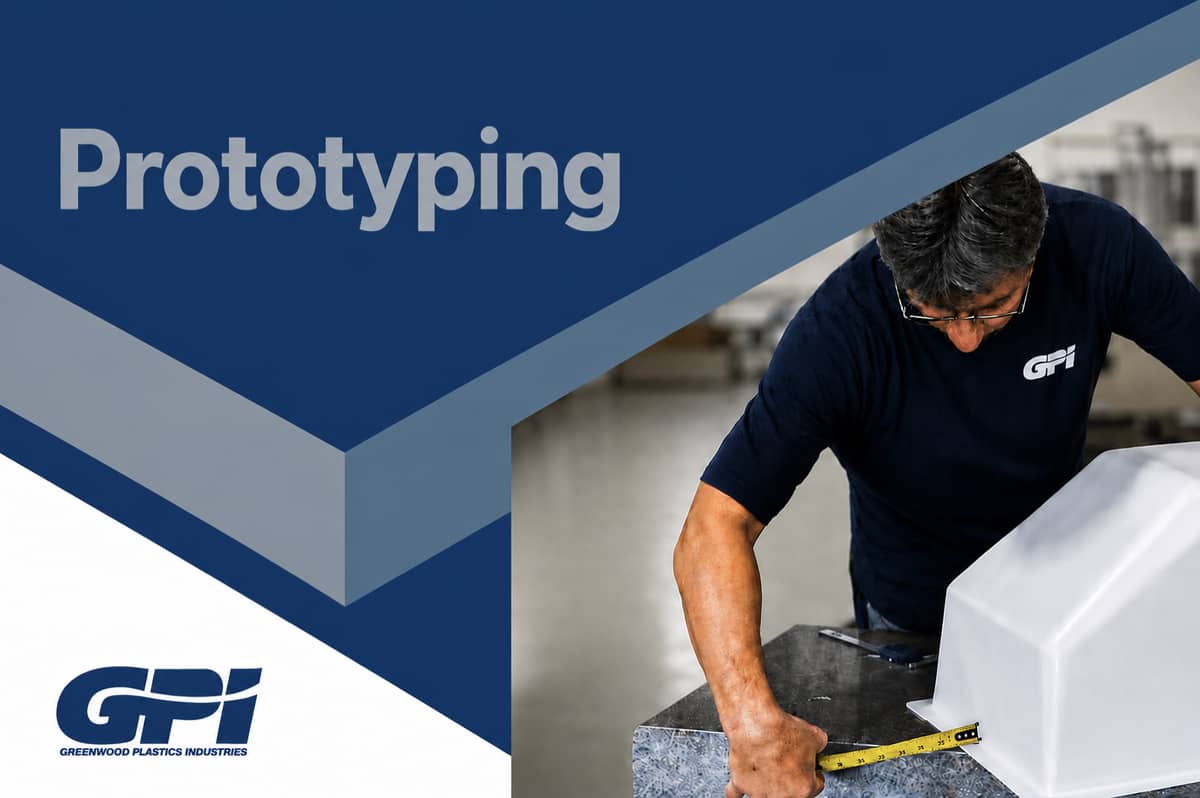
Once thermoforming has been confirmed as a viable solution, prototyping becomes a valuable next step. A physical prototype allows you to review the part’s quality, appearance, and overall usability before moving into full production.
It also reveals opportunities to optimize the design for better performance, more uniform material distribution, or cleaner trimming. Addressing those details early can reduce costly changes later in the process.
Making the Right Decision
Choosing the right manufacturing method is about more than confirming that the part can be made. It is about finding the optimal balance of function, geometry, material properties, production volume, and long-term use.
For many custom plastic components, thermoforming offers an outstanding combination of durability, design flexibility, and cost efficiency. The best way to decide whether thermoforming is the right approach is to review your project with an experienced thermoformer early in the process.
At Greenwood Plastics Industries, we partner with businesses to develop thermoformed solutions tailored to their specific applications. Whether you have a detailed drawing, an existing product you want to improve, or just an initial idea, our team can help identify the best approach.
Contact GPI today to discuss your next project or request a quote.
__________________________________________________________________________
A Quick Checklist Before Moving Forward
Now that you have a better sense of whether thermoforming is right for your project, the next step is to gather a few key details. Before requesting a quote or moving into design review, it can be helpful to think through the following questions:
- What problem does the part need to solve?
- How will it be used in a real-world setting?
- What kind of handling, weight, impact, or wear must it withstand?
- Does it need to protect, contain, organize, display, transport, nest, stack, or slide?
- Will it need to fit a specific vehicle, shelf, machine, fixture, or storage space?
- Will the part be exposed to moisture, chemicals, temperature changes, cleaning, or outdoor conditions?
- Are there specific material, thickness, appearance, or durability expectations?
- Is this a one-time need, a recurring order, or a part that may be used across multiple locations?
- Do you have a drawing, sample, photograph, or existing product that can serve as a reference?