High-Volume Custom Plastic Thermoforming Services
At GPI, we specialize in high-volume custom plastic thermoforming for OEMs that require durable, lightweight, and cost-effective plastic components.
With more than 30 years of American manufacturing experience and a fully in-house engineering and production team, we deliver repeatable quality at scale for industries including healthcare, automotive, aerospace, funeral service, material handling, and more.
Watch this video to see the custom thermoforming process.
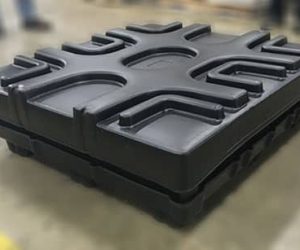
Large Part Molding
GPI is a leader in large product, heavy-gauge molding. We are set up to handle molds as large as 30” x 118” or 54” x 96.”
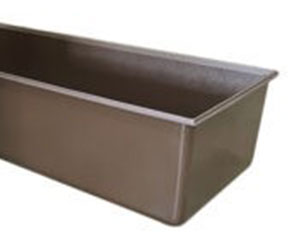
Deep Draw Options
GPI has deep draw capability for a wide variety of strong, lightweight and seamless final products.

Meet Deadlines
You need your products on time. GPI’s in-house thermoforming machine shop keeps products on time and on budget.
Capabilities at a Glance
| Capability | Details |
|---|---|
| Forming Methods | Vacuum forming, deep draw |
| Max Forming Size | Up to 96” x 48” (MAAC automatic four-station rotary machine) |
| Production Volume | High-volume and long-run production |
| Secondary Services | CNC trimming, assembly, finishing, printing, fulfillment |
| Materials | ABS, PVC, HDPE/LDPE, PETG/rPET, Kydex®, Acrylic, Polystyrene, Polypropylene |
| Industries | Healthcare, Automotive, Aerospace, Funeral Service, Material Handling, Retail, Rail, among others |
What Is Thermoforming?
Thermoforming is a highly efficient process in which a heated plastic sheet is formed over a mold and trimmed into a finished three-dimensional part.
The method is ideal for creating durable, lightweight, moderate and large sized components.
It offers significantly lower tooling costs and faster lead times compared to injection molding, especially in high-volume production cycles.
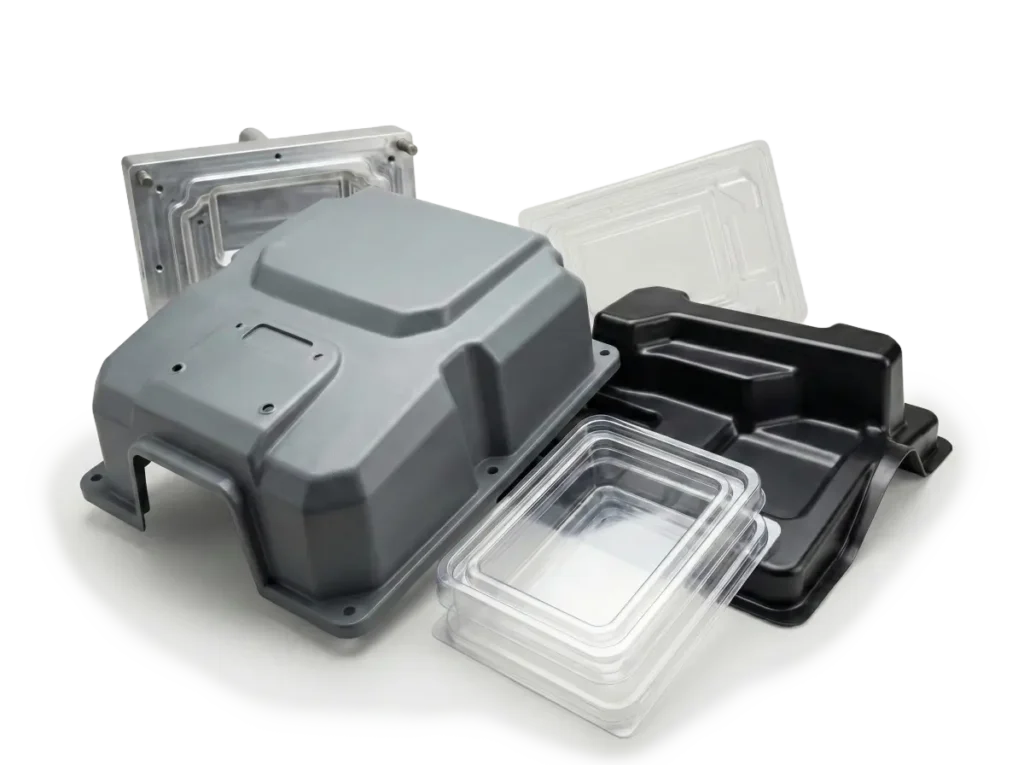
Why Choose GPI for High-Volume Production?
GPI Plastics is your #1 choice for high-volume plastic thermoforming in the United States.
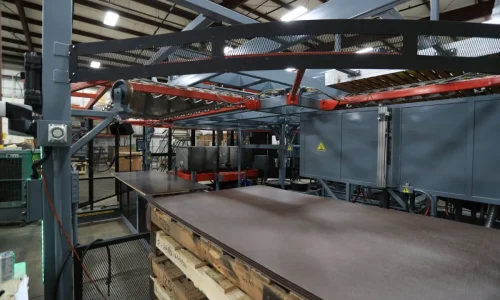
30+ Years of Proven Manufacturing
Family-owned for four generations, GPI offers stability, expertise, and the personalized partnership that global competitors can’t match.
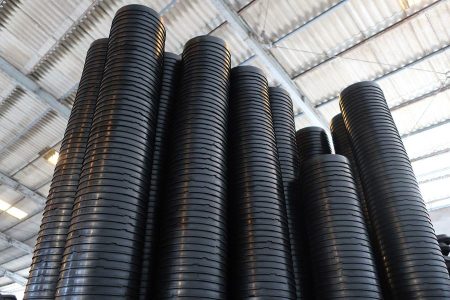
Large-Scale Capacity
With nine state-of-the-art thermoforming machines, including multi-station rotary systems with double ovens for rapid cycle times, we support long-run programs with consistent, repeatable quality.
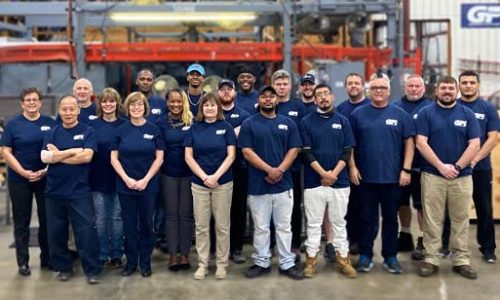
American-Made Reliability
From our Danville, Illinois facility, we communicate every step of the process, and are committed to maintaining predictable schedules while reducing supply chain risks for our clients.
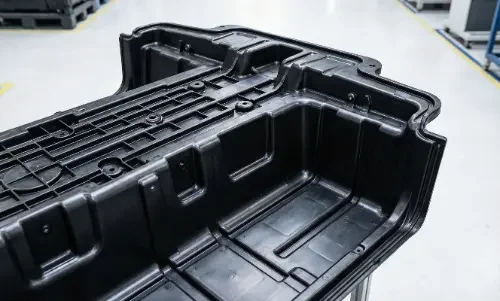
Cost-Effective for Large Parts
Thermoforming tools can cost up to 70% less than comparable injection molds, and typical tooling lead times range from 4–8 weeks, enabling faster launches and lower total cost of ownership.
Industries We Serve
Medical Devices & Healthcare
Automotive & Commercial Vehicles
Aerospace (Aircraft & Spacecraft)
Retail Displays & Consumer Goods
Material Handling & Logistics
Rail & Transportation
Funeral Service & Specialty Markets
Ready to Get Started?
Materials We Work With
Our experts help you choose the right material for durability, aesthetics, regulatory needs, and cost efficiency.
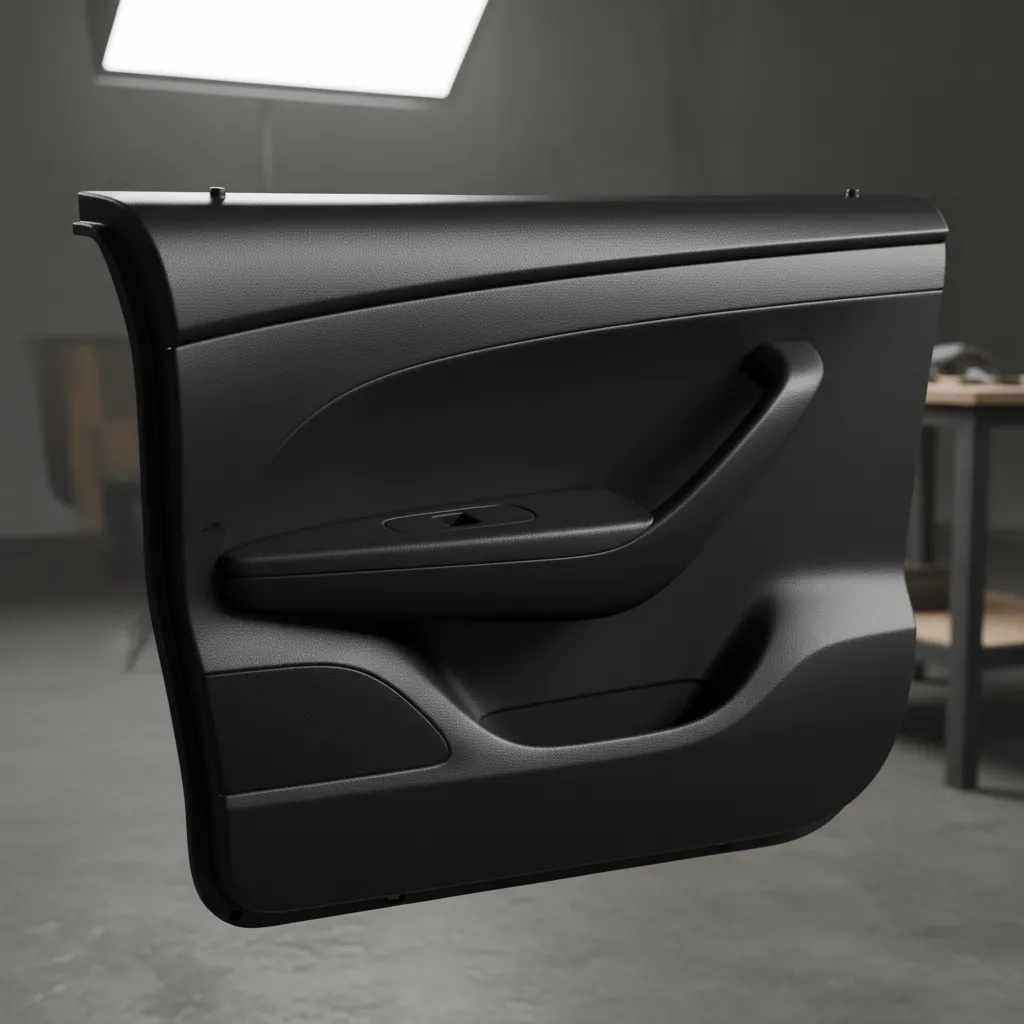
ABS
A versatile, high-impact thermoplastic known for its toughness and excellent surface finish, making it ideal for automotive parts and durable equipment housings.
PVC
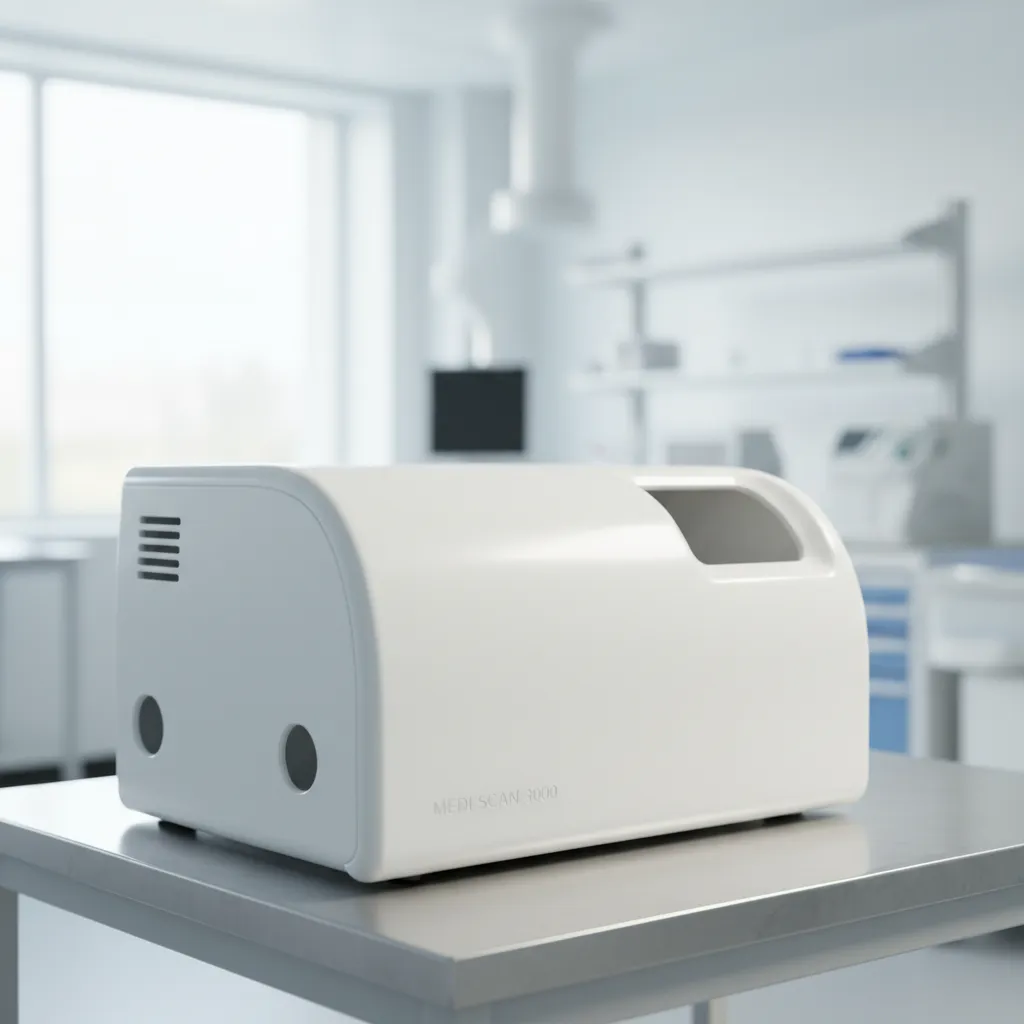
Offers exceptional chemical resistance and natural flame retardancy, making it a standard choice for industrial housings and medical equipment covers.
HDPE / LDPE
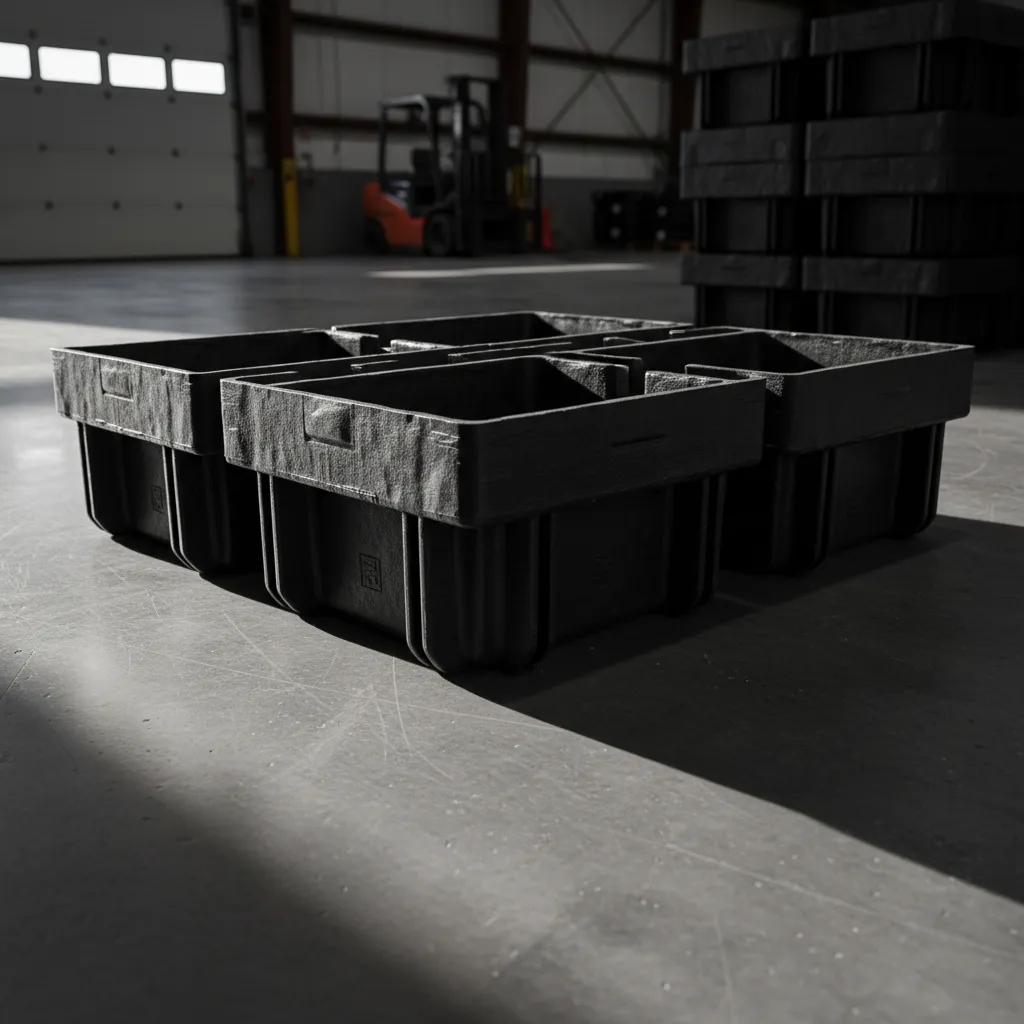
Extremely durable and chemically inert, these materials are perfect for heavy-duty dunnage, utility carts, and outdoor applications that must resist wear and tear.

PETG / rPET
Sustainable, EPR-aligned options
These materials combine superior impact strength with high optical clarity, offering eco-friendly recycled grades that align with your sustainability and EPR goals.

Kydex®
Including FST-rated grades.
A premium, high-performance alloy meeting strict fire, smoke, and toxicity (FST) standards for aerospace, medical, and mass transit interiors.
Acrylic
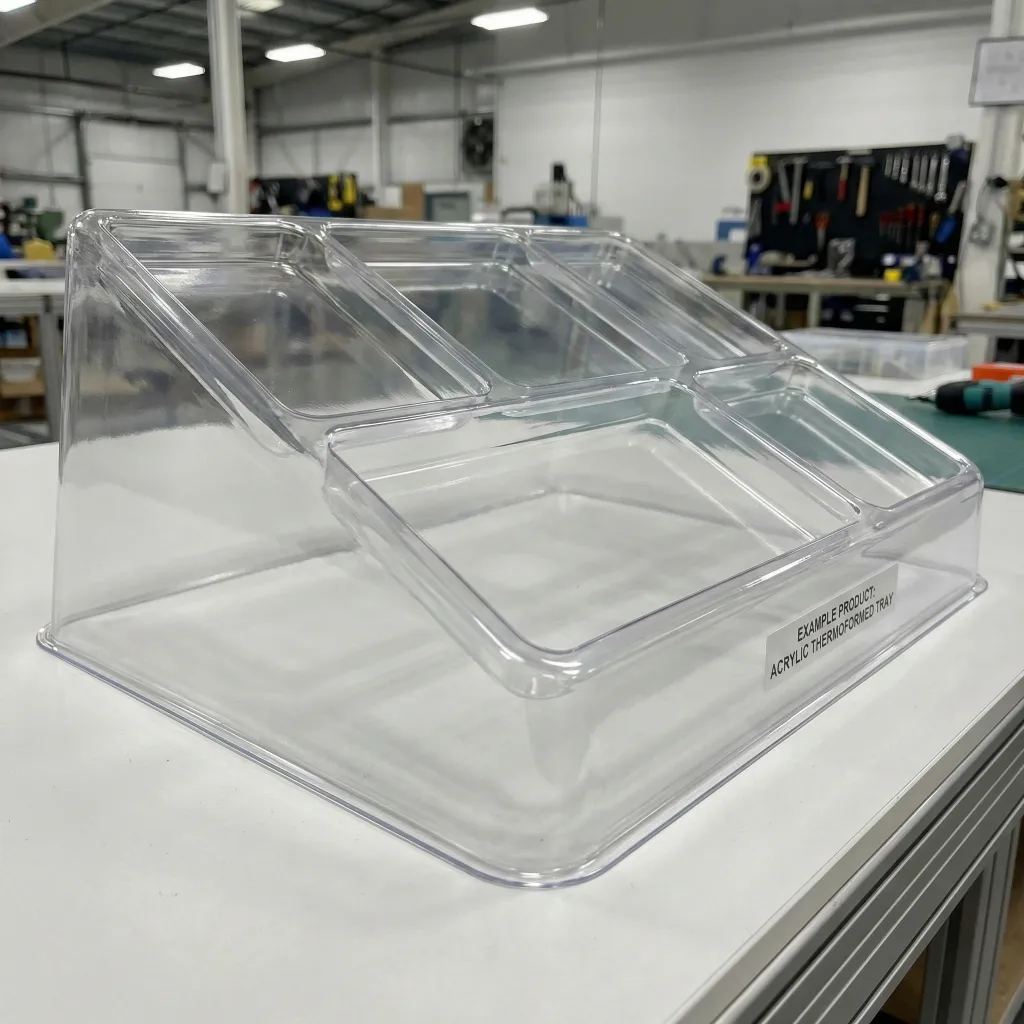
Provides glass-like transparency and excellent weatherability, making it the go-to material for retail displays, lenses, and high-aesthetic applications.
Polystyrene
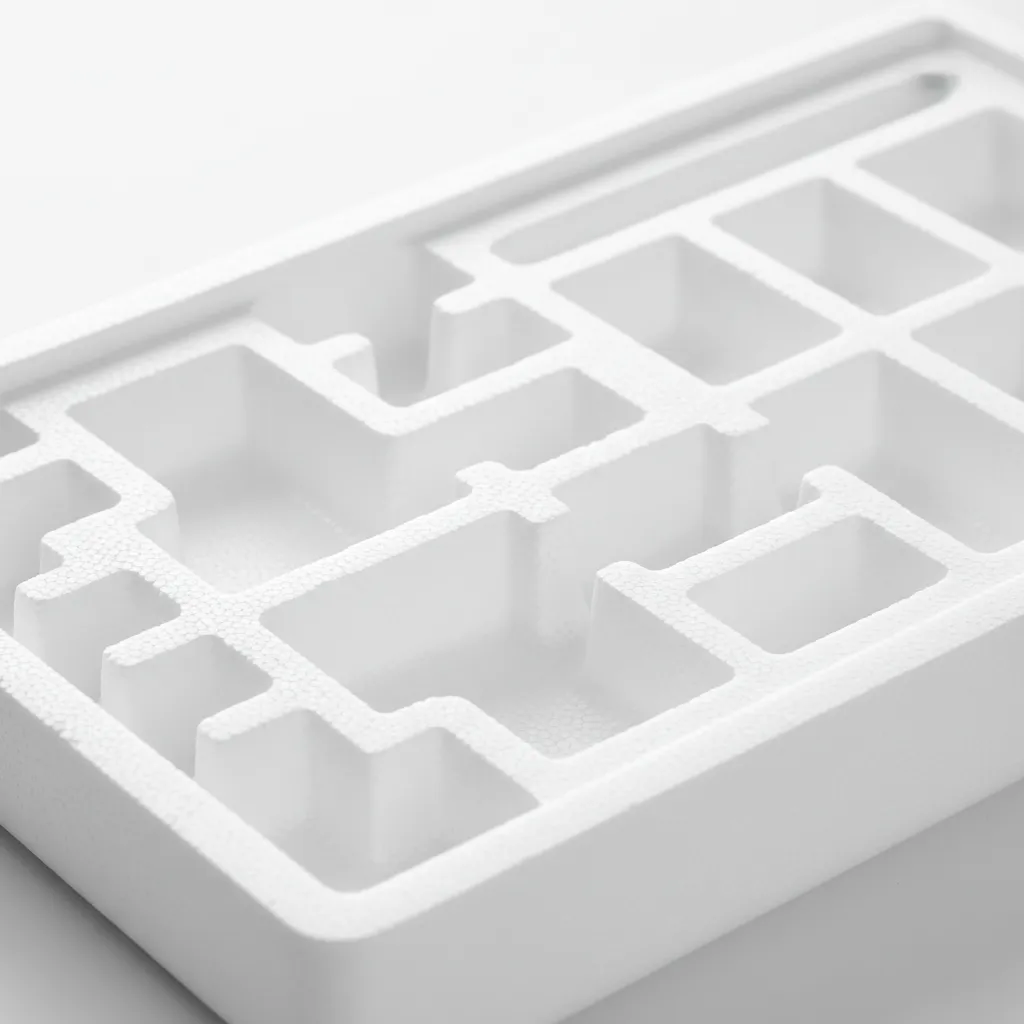
A cost-effective and easy-to-process material widely used for disposable packaging, point-of-purchase displays, and lightweight trays.
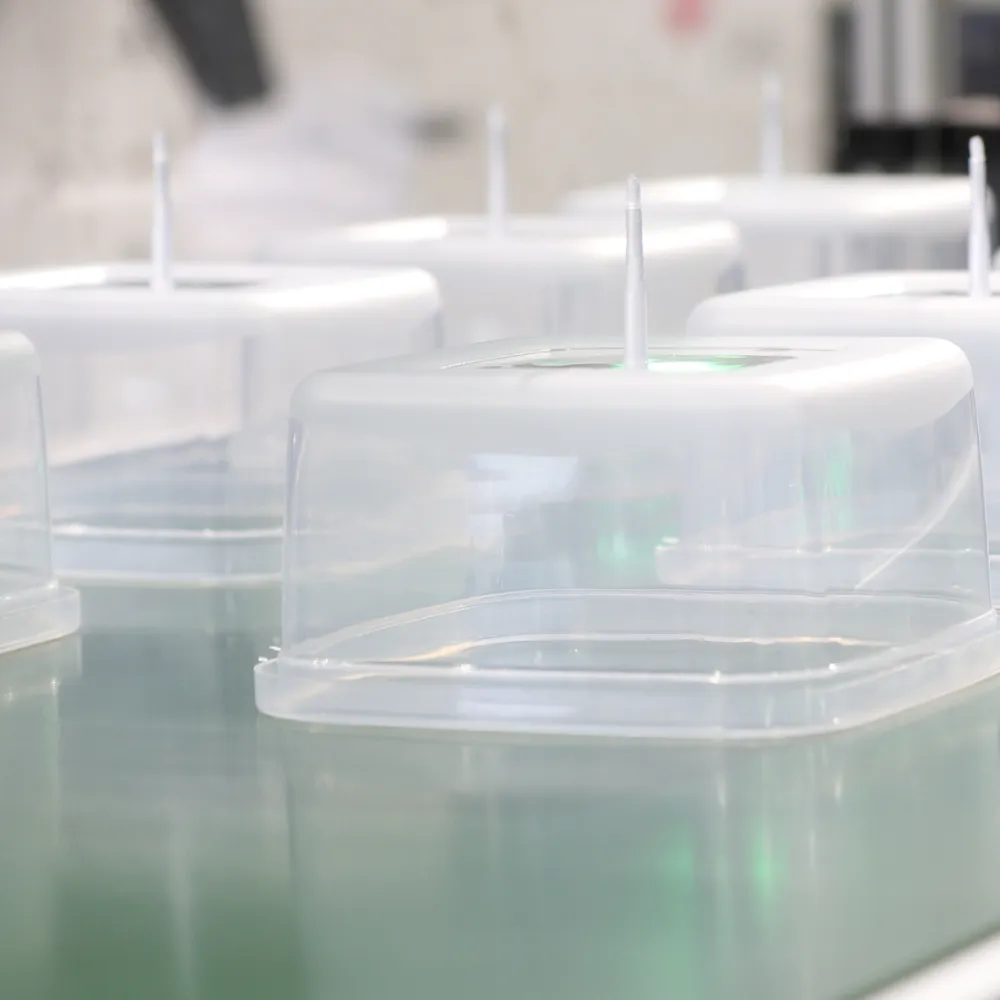
Polypropylene
Highly resistant to chemical solvents and fatigue, this flexible material is excellent for medical packaging, storage bins, and food containers.
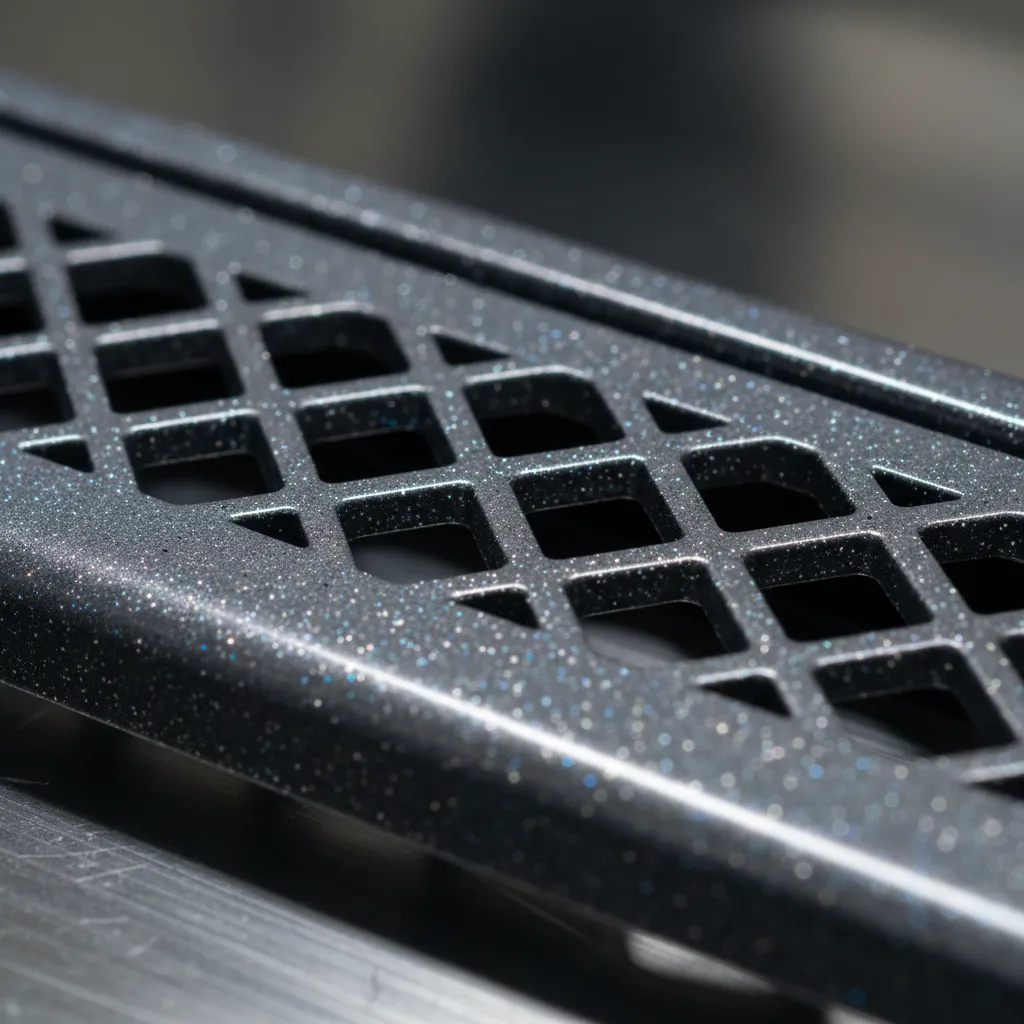
Other Specialty Engineered Plastics
We source advanced resins (including ESD-safe, high-heat, and UV-stable options) to meet your most complex technical performance requirements.
Our High-Volume Production Process
1. Engineering & DFM review to improve manufacturability and reduce cost.
2. Close management of external tool design and build for tight control and fast turnaround.
3. High-speed forming using rotary thermoformers for continuous throughput.
4. Robotic/CNC trimming for precision fit and finish.
5. Assembly, finishing, printing, and fulfillment as needed.
Frequently Asked Questions
What counts as “high-volume” thermoforming?
For most projects, high-volume refers to several thousand to tens of thousands of parts per year, depending on size and material.
What are typical lead times?
Tooling can often be completed in 4–8 weeks, with production beginning immediately afterward, depending on material availability and part complexity.
Do you specialize in thin-gauge or thick-gauge thermoforming?
GPI specializes in thick-gauge thermoforming. Our leading-edge equipment will accommodate thicknesses ranging from .065 inches to .5 inches.
Which industries do you support?
We thermoform components for medical, aerospace, automotive, retail, industrial, and specialty applications.
Can you help with design for manufacturability (DFM)?
Absolutely. Our engineering team provides early DFM guidance to optimize performance, cost, and manufacturability.
What does GPI do for sustainability?
The team at GPI takes eco-friendliness seriously. Nearly all types of plastics we use are recyclable and can be repurposed for a second life. We’ve also implemented processes to ensure any excess material that accumulates during production can be converted into valuable resources.