
If the term “thermoforming” is new to you, you’re in good company. Many are unaware of this process, despite its role in producing numerous everyday parts and products.
But what is plastic thermoforming exactly? Let’s delve deeper and take a closer look at why it holds such a prominent place in the manufacturing world.
Thermoforming is an industrial manufacturing method that utilizes heat to form flat sheets of plastic into strong, lightweight three-dimensional objects.
The resulting products (or parts) have specific contours and details that can’t be achieved with traditional processes like molding or machining.
How are thermoformed products made?

The process of thermoforming begins by heating thin sheets of thermoplastic material until it becomes pliable and easy to manipulate.
While still hot, the plastic is placed onto a rigid backing platform which is most often referred to as a mold. The material is secured by either vacuum pressure or clamps.
Next, positive pressure is applied to the sheeting, allowing it to take its new shape. Once complete, the object is given time to cool and harden before being ejected from the machine that holds the mold in place.
The resulting product or part is then ready for secondary operations such as trimming, cleaning, painting, assembly, etc. depending on its final use.
What kinds of products can be made using thermoforming?
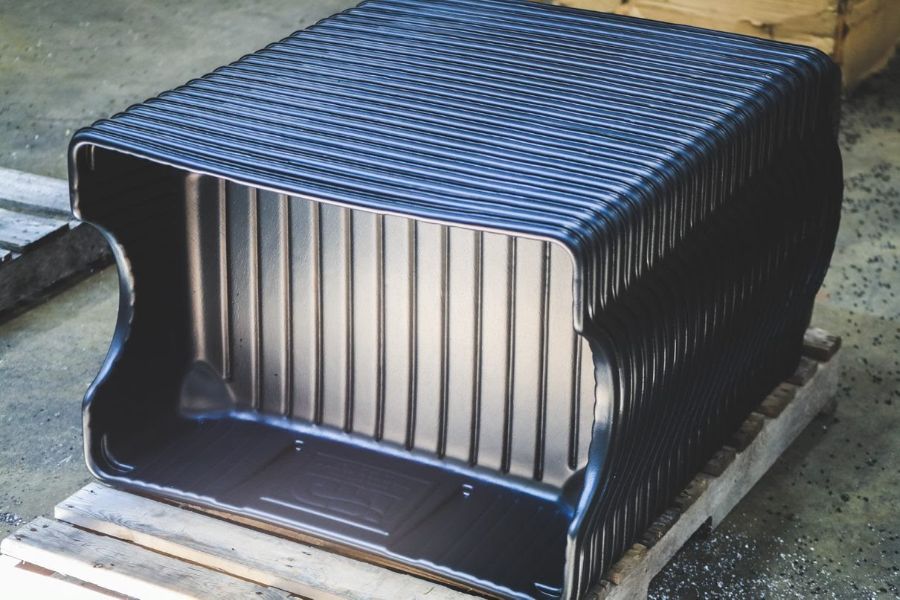
There are countless items that can be thermoformed by making slight adjustments to the tooling and forming processes. In fact, many companies manufacture parts that serve several industries.
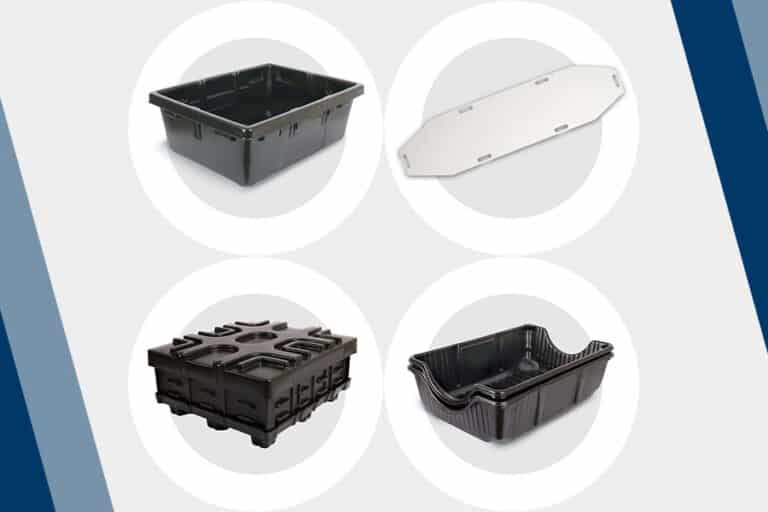
Greenwood Plastics Industries, for example, makes products for the transportation, healthcare, retail, and funeral industries, among others. Some of the items GPI thermoforms include airline tubs, railroad containers, patient transfer boards, and flower carts.
Below are some of the additional parts that can be made using thermoforming:
- Aircraft paneling and interior parts
- Machinery and equipment covers
- Bins, containers, clamshells, blister packs, and trays
- Automotive dashboards, parts, and trim
- Consumer products including toys, sporting goods and recreational equipment
Are there different types of thermoforming?
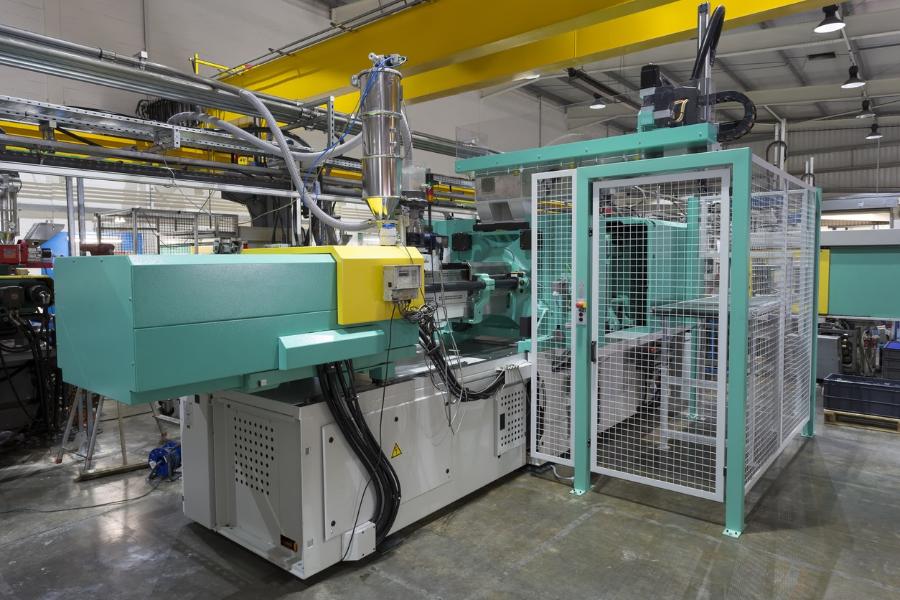
Yes, there are several variations of thermoforming. Each one can effectively and efficiently create specialized goods. The requirements for the finished product such as material, shape, and thickness determine what process is best.
Thermoforming can be broadly classified into the following categories:
- Vacuum forming
- Pressure forming (compression molding)
- Twin sheet molding
- Match molding
- Drape molding
- Plastic extrusion
- Injection molding
- Blow molding
What are the most common types of thermoforming?
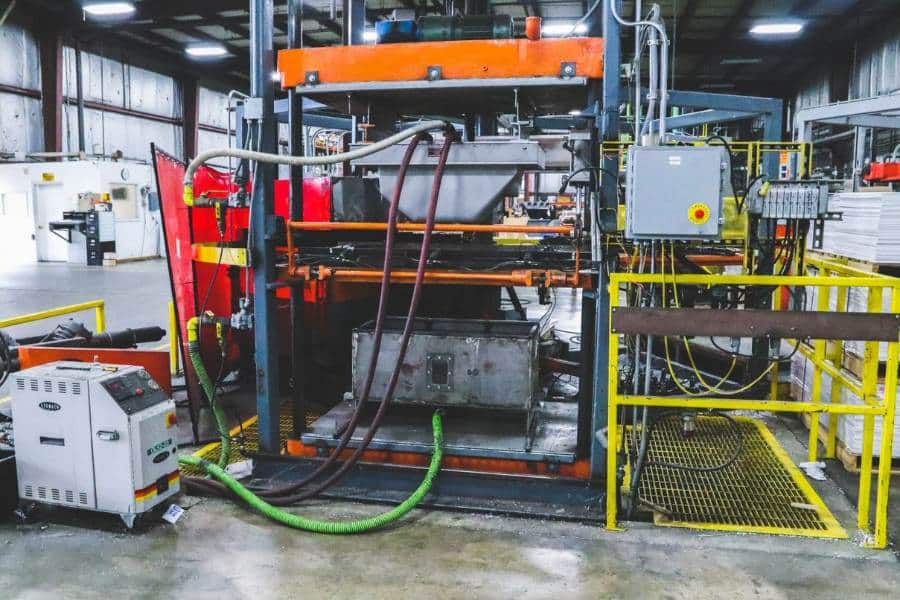
Vacuum forming and pressure forming are the most widely used techniques. Both processes produce durable products making them useful in a lot of applications.
One of the main differences between the two methods is vacuum forming utilizes suction to force the sheet into the mold, while pressure forming requires a mechanical device.
Vacuum forming also takes place at a lower temperature and pressure. This allows for several different types of plastic sheets to be used.
Pressure forming is the faster process. However, it requires additional mechanical components that have a lofty price tag. For this reason, pressure forming is primarily used in mass production.
Are some types of thermoforming more complex than others?
Yes, certain types of thermoforming are indeed more complex than others, with twin sheet and drape forming ranking at the top of the list.
Twin sheet forming stands out because it requires heating and molding two plastic sheets at once. Post forming, these sheets are fused together, resulting in a hollow structure. The technique is generally employed to produce double-walled or concave objects, such as fuel tanks, pallets, and automotive components.
Matched molding adds another layer of complexity since it necessitates both a male and a female mold. This technique also operates independently of external forces, with two mold halves being clamped together to form the part.
Due to its precision and capacity to achieve high tolerances, matched molding is preferred for fabricating aesthetic automotive components.
What technique is preferred for forming large components?
Drape molding is best-suited for creating large plastic contoured parts, like aircraft canopies and windshields. In this variation of thermoforming, a heated sheet is positioned over a male or clamshell mold and then takes on its shape.
Similar to matched molding, drape forming does not employ vacuum or pressure. Instead, it relies on gravity or external force to shape the softened material. Depending on its intended purpose, manual or mechanical intervention may be necessary to ensure accuracy and a snug fit to the mold.
What are the advantages of using thermoformed parts and plastics?
Thermoforming provides several advantages over other plastics manufacturing processes. It is a preferred process because it offers design flexibility, reduced costs, shorter lead times, and weight savings.
Parts that have been thermoformed also have a high degree of dimensional stability – they hold their size and shape very well – even without additional reinforcement. They can be up to twice as strong as injection molded components.
Another benefit of thermoforming is its ability to produce products quickly without compromising quality.
What types of materials are used in thermoforming?

Thermoforming uses a range of materials each with its unique properties. The most common ones include:
- PET (Polyethylene Terephthalate): Used in packaging due to its strength, thermo-stability, and transparency. PET is also recyclable, making it environmentally friendly.
- HDPE (High-Density Polyethylene): Known for its high strength-to-density ratio, HDPE is used to manufacture various types of durable parts.
- PVC (Polyvinyl Chloride): Commonly used for bottles, non-food packaging, and bank cards, PVC is versatile and available in rigid and flexible forms.
- PP (Polypropylene): Popular for its resistance to chemicals, fats, and bacteria. Used in the production of automotive parts, consumer products, and packaging materials.
- PS (Polystyrene): Known for its insulating properties in foam form and rigidity in solid form. Used in food packaging, insulation, and disposable cups and plates.
Is plastic thermoforming environmentally friendly?
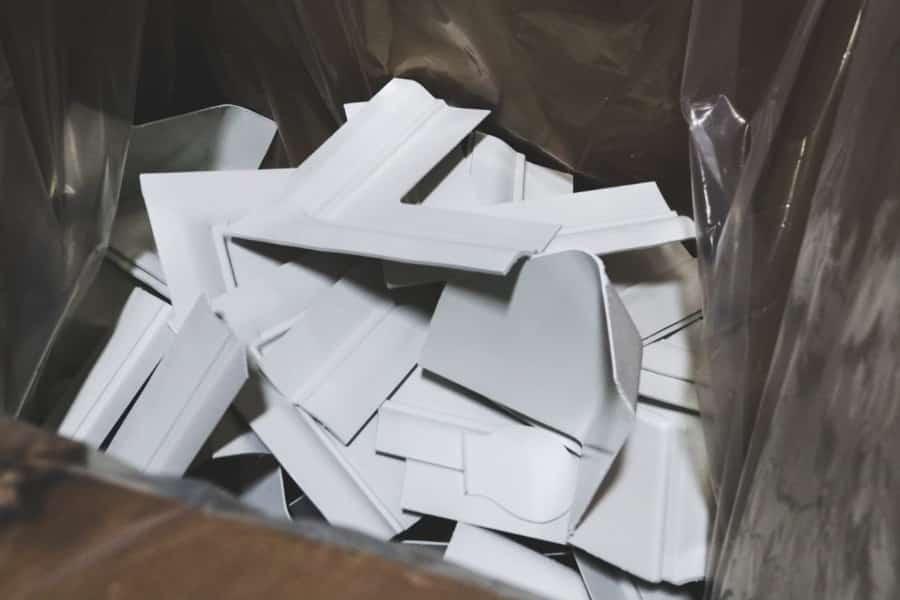
Yes, thermoforming is considered safe for the environment because it has a low consumption of energy compared to other manufacturing methods.
Thermoforming also creates minimal waste since very little byproducts remain after production. A lot of eco-friendly companies take the initiative to melt down and recycle the leftover scrap pieces.
Another reason thermoforming is environmentally friendly is that there aren’t any toxic fumes emitted during production. This is due to the fact that certain chemicals and metals that are used in other types of manufacturing aren’t needed to thermoform plastic.
Is thermoforming cost-effective?
Thermoforming is very cost-effective, especially for small to medium-sized production runs. This can largely be attributed to the fact that it requires minimal equipment and uses a rather simple heating process.
While machinery costs vary, thermoforming products in general do not require expensive tooling compared to other methods. The process has shorter lead times and requires fewer laborers, which helps keep overhead costs down as well.
Be sure to read our more detailed thermoforming cost guide here.
What type of industry standards and compliance exist?

Depending on the product’s end-use, adhering to industry standards and regulations is crucial to ensure safety, efficacy, and legality of thermoformed products. Examples include:
- Food packaging must comply with FDA regulations.
- Medical devices and packaging must meet strict sterilization and biocompatibility standards.
- Automotive components need to meet safety and performance standards.
- Parts should be labeled with appropriate recycling codes based on material type.
Thanks for Reading
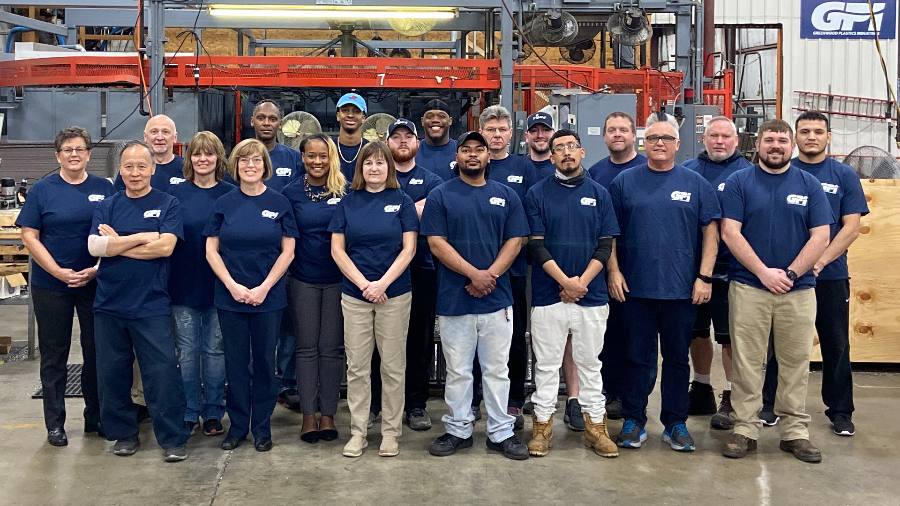
Thermoforming plays a vital role in producing a diverse range of everyday items. From simple packaging to complex automotive components, its applications are extensive and versatile.
The advantages of thermoforming, including design flexibility, cost-effectiveness, and environmental friendliness, make it a go-to choice across many industries.
As technology continues to evolve, the future of plastic thermoforming looks promising, with endless possibilities for innovation and progress.
If you have any questions about how GPI uses thermoformable materials at our manufacturing plant, contact us today!
Need custom thermoforming for your next project? Request a quote from our experts.